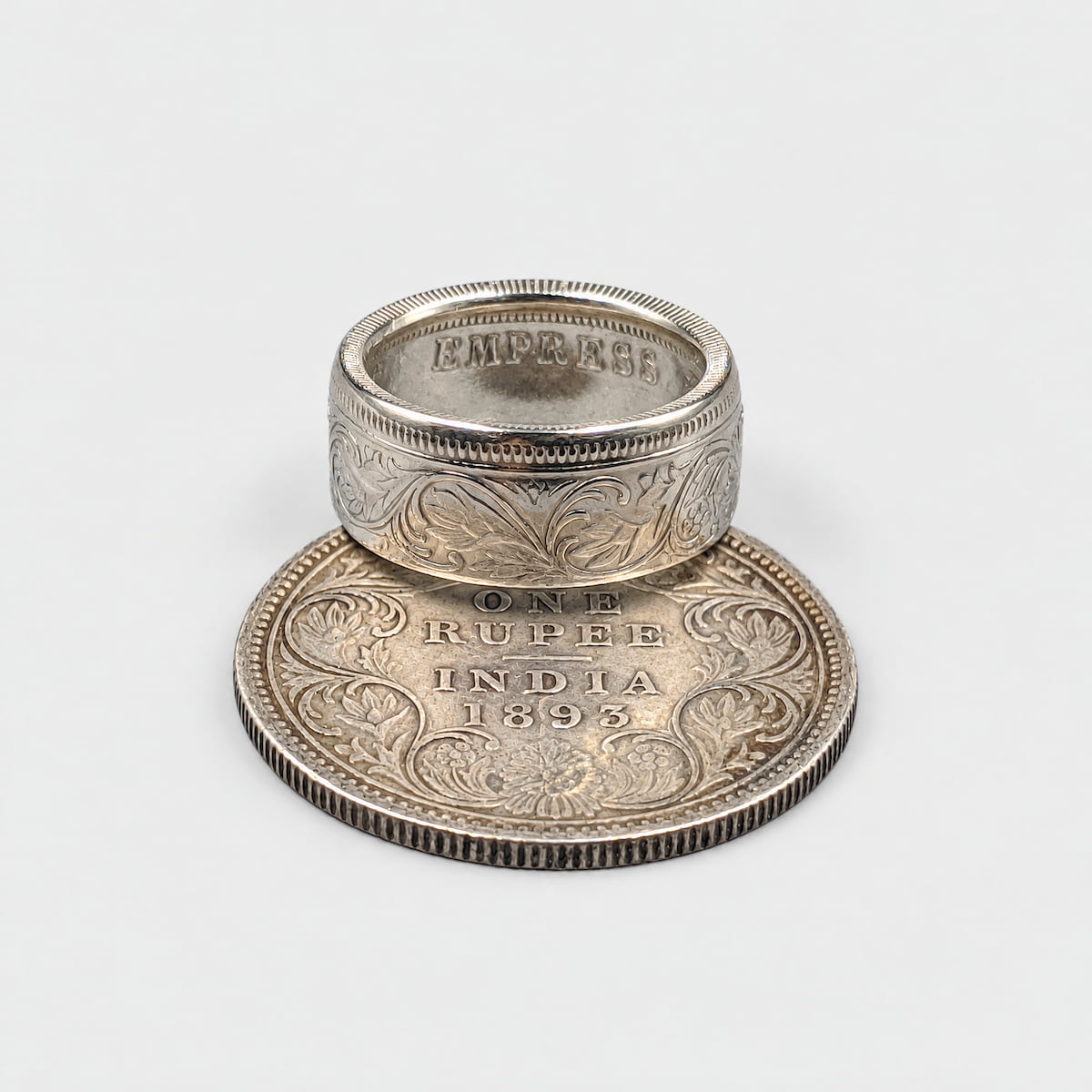
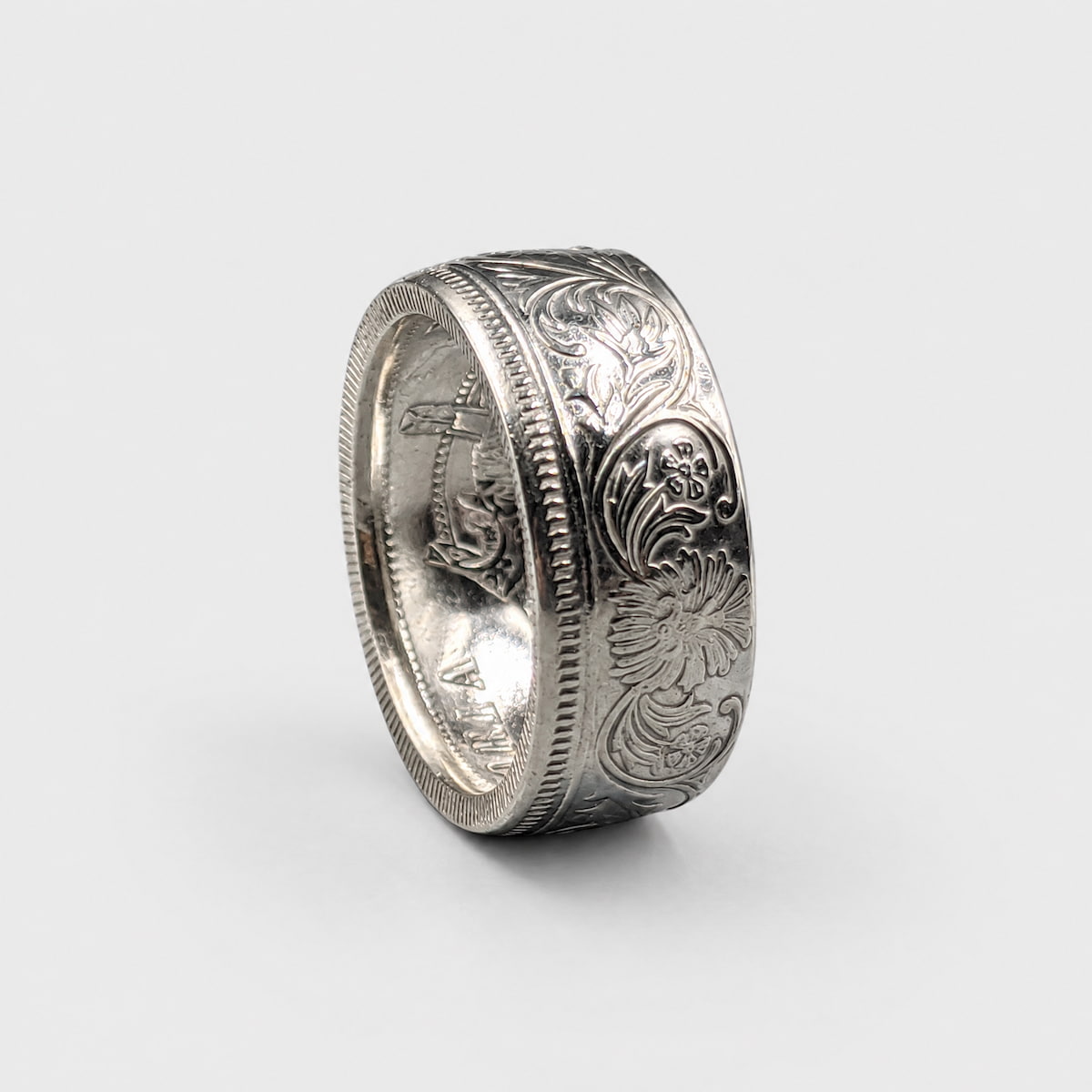
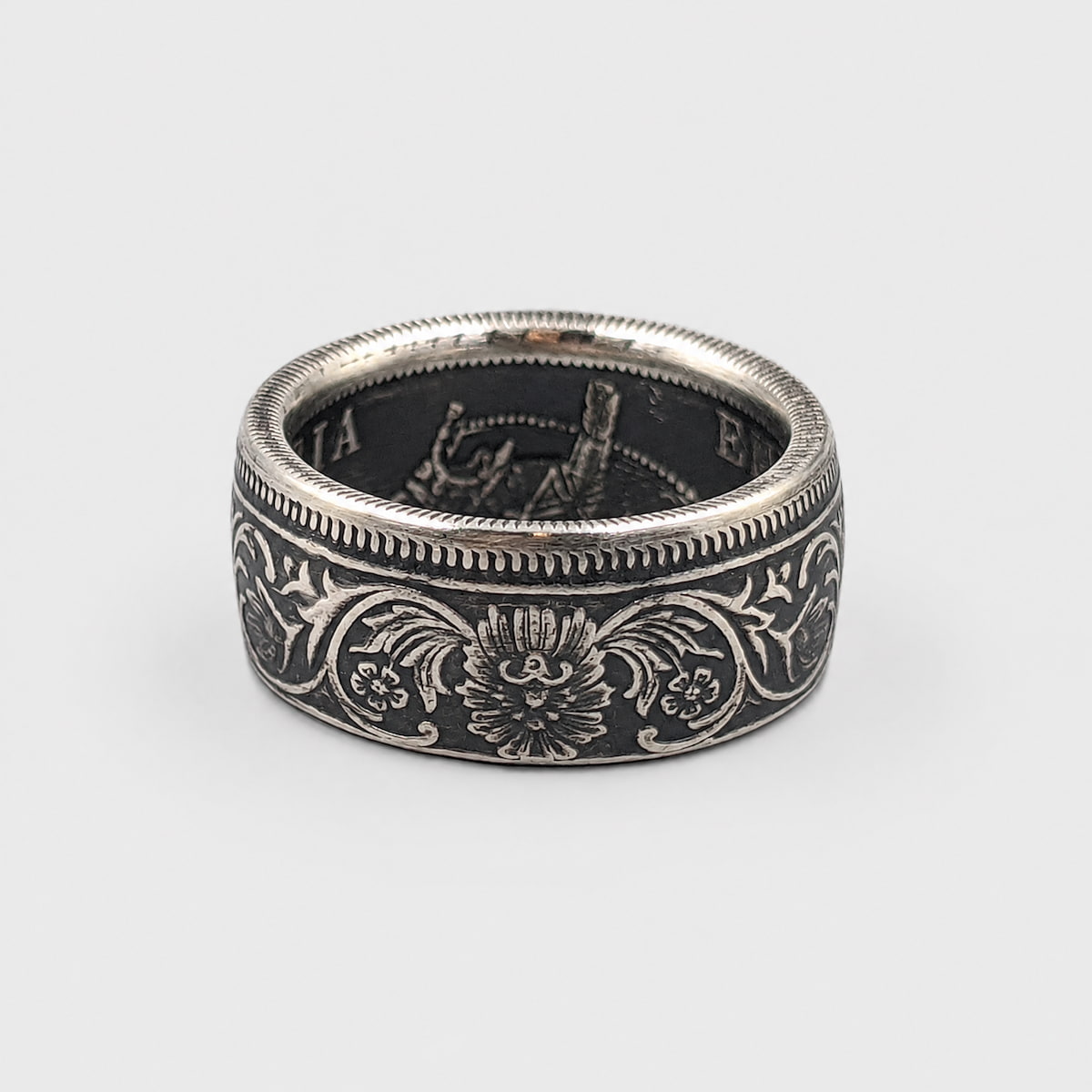


The currency of an empire.
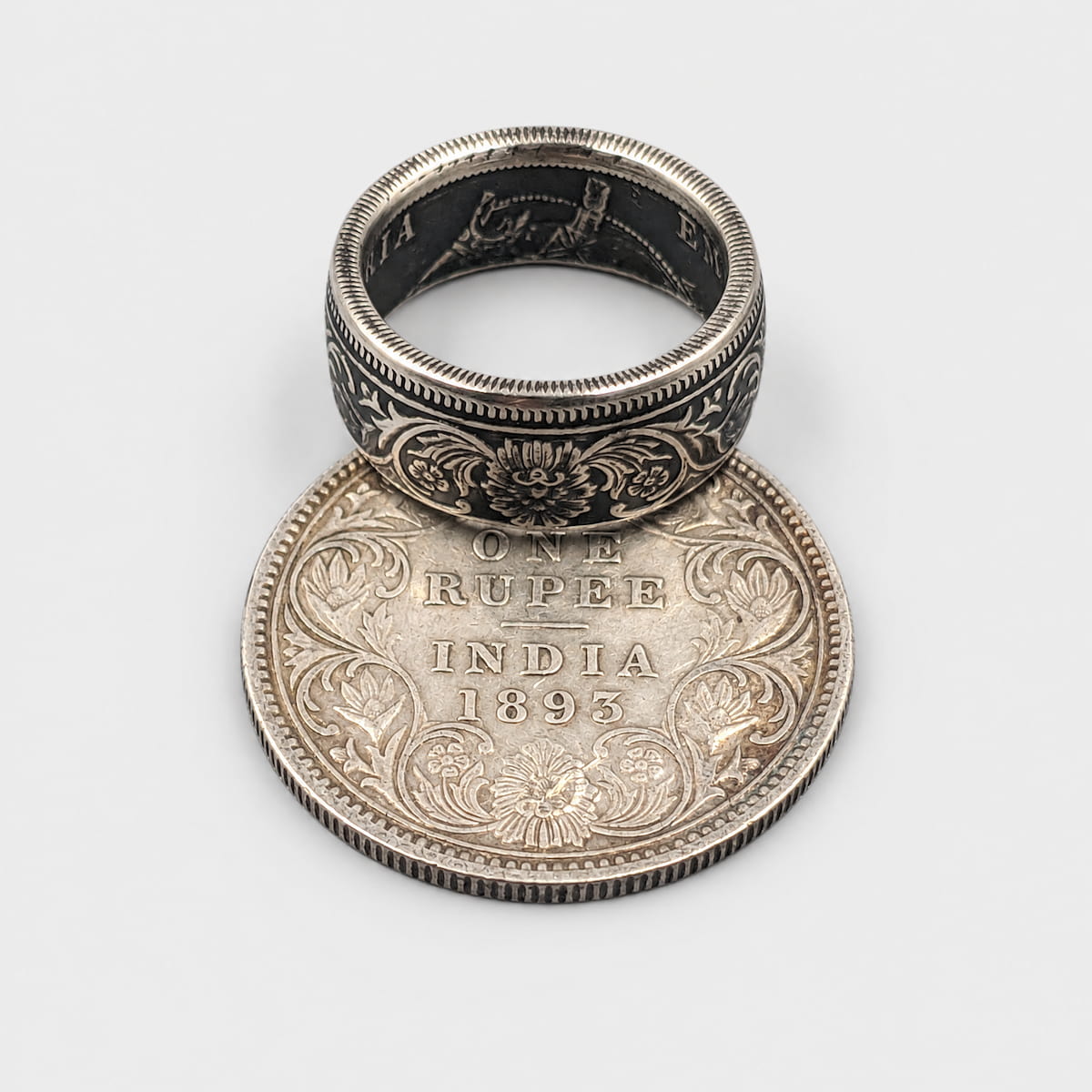
The British India One Rupee coin was first minted in 1847 and continued through the end of Queen Victoria’s reign in 1901. Struck in .917 fine silver, the coin served as the cornerstone of the Indian colonial economy and was a unifying symbol of British administration across the subcontinent.
Coins from this era carried two distinct portraits of Queen Victoria: the youthful “Young Head” portrait used in the earlier years, and the stately “Mature Head” portrait in the later issues. The reverse features a beautifully detailed wreath surrounding the denomination, reflecting Victorian design sensibilities and the fusion of British and Indian iconography.
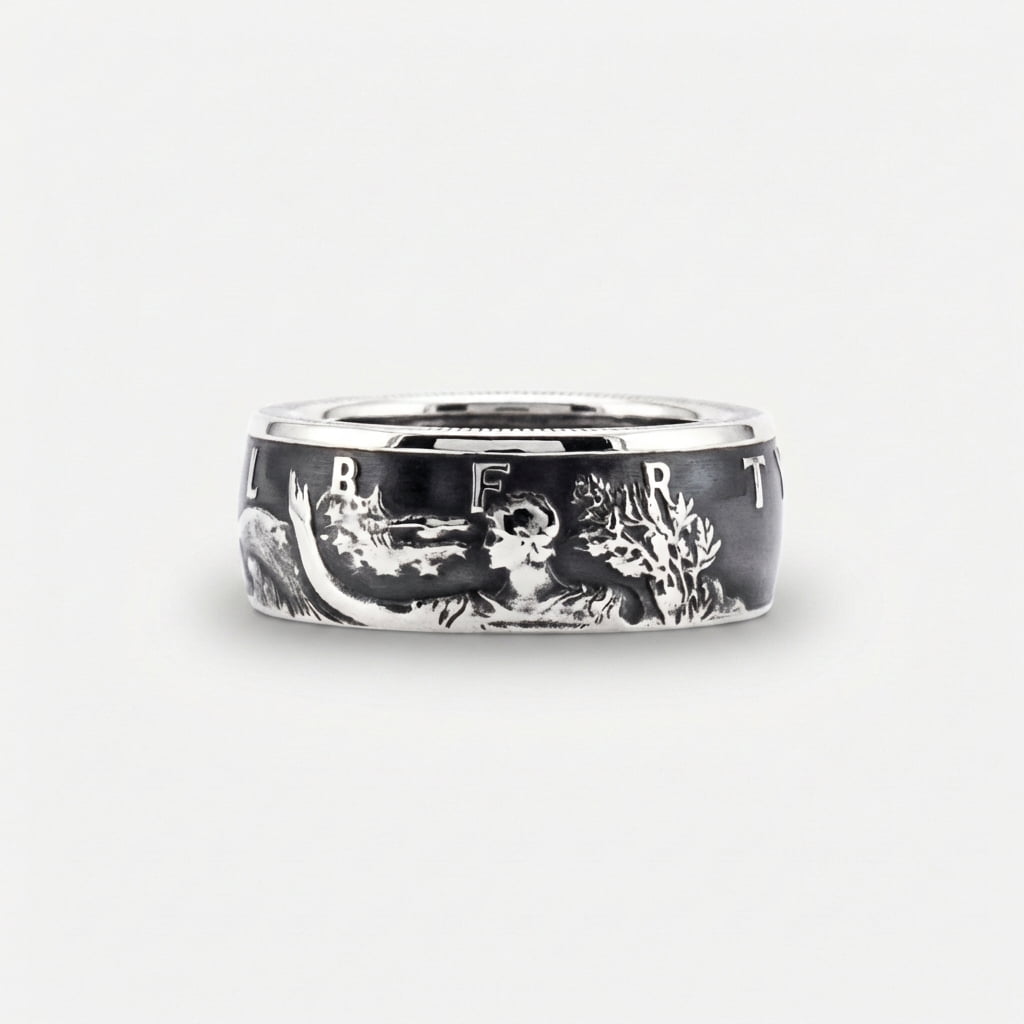
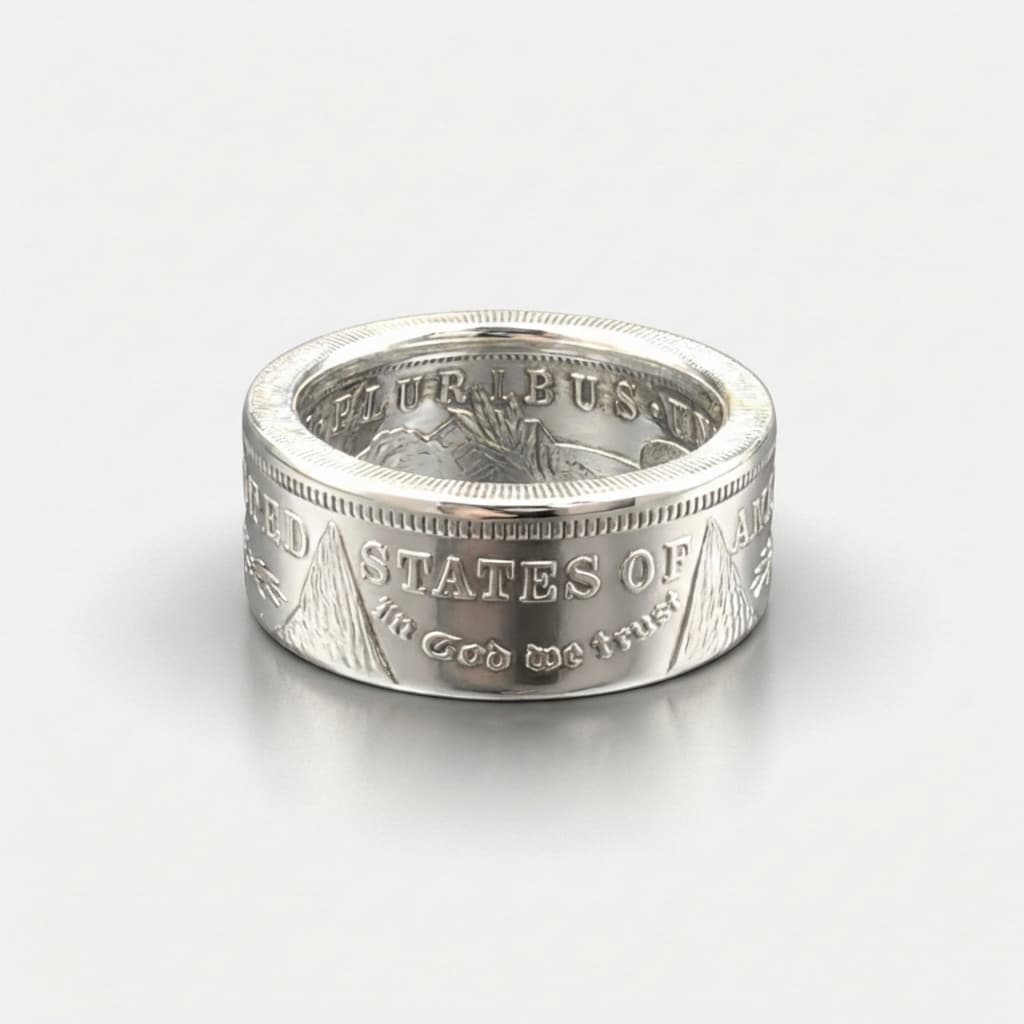
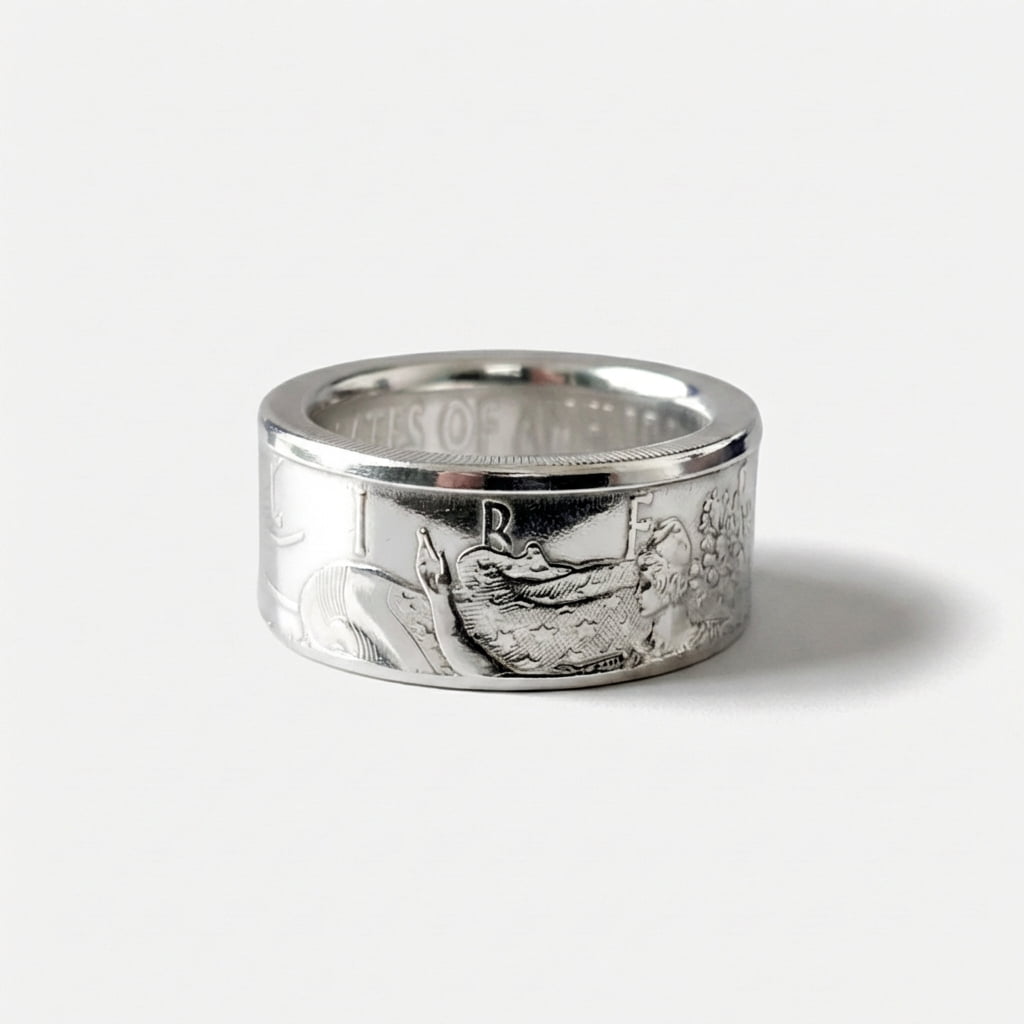
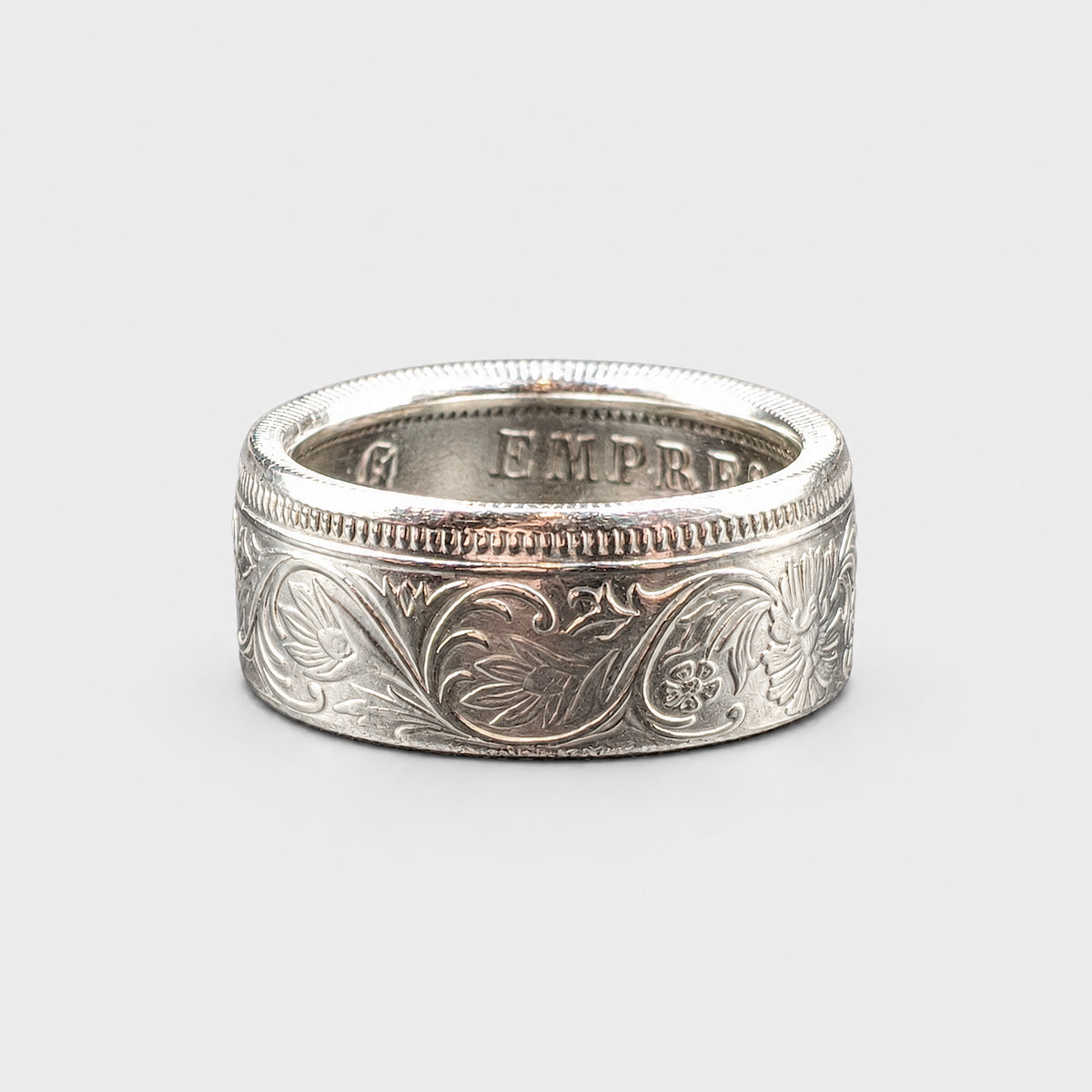
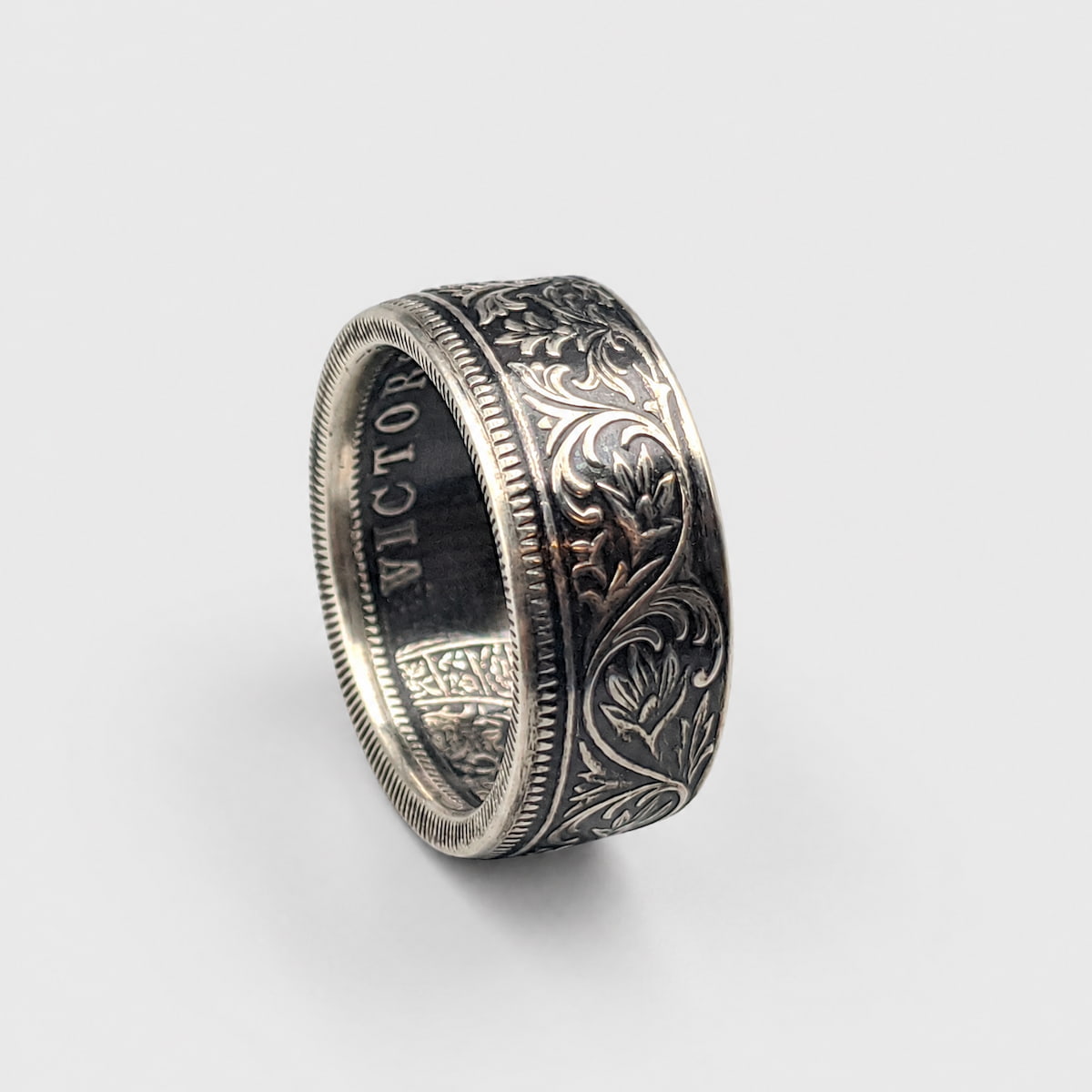
Today, these coins are coveted for their historical importance and artistry. When transformed into a ring, the One Rupee coin becomes a wearable artifact of a formative era in global history.
Minted between 1847 and 1901 in .917 fine silver, the One Rupee coin was the backbone of British India’s currency system.
Featuring Queen Victoria’s portrait and a detailed wreath design, these coins are now prized pieces of Victorian heritage.